Business Address
Office 5737 58 Peregrine Road Hainault Ilford Essex IG63SZ UK

Business Address
Office 5737 58 Peregrine Road Hainault Ilford Essex IG63SZ UK

Contents
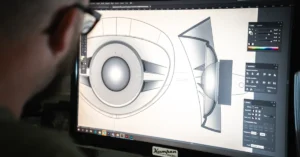
Computer-aided drafting, commonly referred to as CAD, has emerged as the driving force propelling modern design and engineering into new dimensions. In an era that demands precision, efficiency, and inventive solutions, CAD technology has revolutionized the creation and visualization of designs. This article takes you on a comprehensive journey through the realm of CAD, exploring its versatile applications across diverse industries, the manifold advantages it offers, recommended practices for optimal utilization, and its promising future.
Computer-aided drafting, abbreviated as CAD, embodies the utilization of computer software to conceive, alter, and optimize intricate designs and technical drawings. It represents a monumental departure from the traditional manual drafting methods, empowering designers and engineers to operate with unparalleled precision and swiftness.
Computer-aided drafting technology serves as the bedrock of design across a spectrum of industries. In the realm of architecture and construction, CAD software empowers architects to craft intricate architectural plans, while engineers devise structurally sound edifices. Mechanical engineers rely on CAD for the meticulous creation of intricate 3D models for machinery and products, whereas electrical engineers employ it for creating comprehensive wiring diagrams and circuit designs.
The advantages of CAD are multi-pronged and profound. Its capacity to deliver precision, efficiency, and augmented productivity is unrivaled. Computer-aided drafting fosters seamless collaboration among team members, mitigating design errors and costly revisions. Furthermore, it offers substantial long-term cost savings by simplifying and expediting the design process.
Leading CAD software titans like AutoCAD and SolidWorks provide an array of features and tools, catering to diverse design requisites. These encompass 2D and 3D modeling capabilities, rendering tools facilitating realistic visualizations, and parametric design functionalities that expedite modifications.
For CAD novices, assimilating best practices is paramount. It commences with a thorough mastery of the software’s user interface and shortcuts to supercharge productivity. Adherence to standardized drawing conventions is pivotal to ensuring lucidity and consistency in designs. Regularly preserving work and implementing version control are pivotal safeguards against data loss.
As technology evolves, so does CAD. Emerging trends, such as AI integration, promise to catapult Computer-aided drafting to new zeniths. AI-driven design assistance and automated error detection mechanisms loom on the horizon. Cloud-based CAD solutions are fostering real-time collaboration among geographically dispersed teams, while CAD finds an integral role in sustainable design, aiding in curbing environmental impacts.
Aspiring professionals looking to excel in Computer-aided drafting are offered a gateway through certification programs and structured training courses. These programs equip individuals with the skills and knowledge imperative to harness the full potential of CAD software. Notably, CAD certification opens the doors to expanded career horizons across diverse industries.
The integration of Computer-Aided Drafting into educational curricula is fundamentally reshaping the pedagogical landscape. Within the domain of STEM (Science, Technology, Engineering, and Mathematics) education, CAD plays a pivotal role in nurturing critical problem-solving skills and nurturing creativity among students. It’s a beacon preparing the future generation of designers and engineers for the evolving demands of modern industries.
Real-world examples vividly underscore CAD’s transformative influence across sectors. Imagine an architectural firm slicing project timelines by 30% through CAD integration or a manufacturing company realizing multimillion-dollar savings by optimizing product designs via CAD simulations. These case studies underscore the tangible benefits of adopting CAD solutions.
Innovation is the lifeblood of any industry, and Computer-aided drafting emerges as the catalyst propelling it forward. By affording designers and engineers potent tools for experimentation and visualization, CAD becomes a muse for creativity. It paves the way for rapid prototyping of concepts, empowering businesses to maintain a competitive edge. Notably, CAD has been instrumental in creating safer, more fuel-efficient, and aesthetically pleasing vehicles within the automotive design domain.
A connected world demands global collaboration, and CAD technology is the enabler. Design teams seamlessly span continents, sharing files, engaging in real-time collaboration, and collectively contributing to projects. This synergy is especially evident in aerospace and defense, where CAD fuels the development of cutting-edge aircraft and military equipment through international collaborations.
Gone are the days when CAD was the exclusive domain of corporate giants with substantial budgets. Today, CAD software is more accessible than ever. The advent of free and open-source CAD tools has democratized the field, enabling small businesses, startups, and independent designers to harness CAD’s prowess without facing prohibitive financial barriers. This democratization of CAD has sparked an innovation renaissance across diverse industries.
In an era that prioritizes sustainability, Computer-aided drafting emerges as a significant contributor to environmentally conscious design practices. Designers and engineers utilize CAD tools to simulate and optimize energy efficiency, material consumption, and waste reduction, leading to the creation of eco-friendly products, structures, and infrastructure. These practices are instrumental in reducing the carbon footprint and conserving precious resources.
CAD extends its reach beyond traditional design realms, making significant inroads into healthcare. CAD plays an integral role in the development of prosthetics, custom implants, and medical equipment. Dentists leverage CAD for designing precision dental restorations, while surgeons rely on it for pre-operative planning, ensuring surgeries are minimally invasive.
Beyond its utilitarian applications, CAD finds a place in the world of art. Artists harness 3D modeling software to craft intricate sculptures, digital paintings, and interactive installations. This dynamic fusion of technology and art underscores CAD’s versatility as a medium for creative expression.
While CAD has wrought a revolution in design, it is not devoid of challenges. Staying abreast of the rapid technological advancements can be an arduous endeavor. Additionally, concerns regarding data security and safeguarding intellectual property loom large. However, these very challenges propel innovation within the CAD ecosystem. As AI, augmented reality (AR), and virtual reality (VR) become seamlessly integrated into CAD software, the horizon holds limitless potentialities.
In summary, Computer-Aided Drafting (CAD) stands as an enduring testament to human ingenuity and the transformative power of technology in shaping our world. From engineering marvels to sustainable design, CAD has evolved into an indispensable facet of contemporary life. As CAD continues its relentless evolution, one truth remains undeniable: its impact on design and innovation transcends boundaries. It is not just a tool; it is an indispensable partner in the quest for a more advanced, efficient, and creatively rich world.
Recommended:
Computer Information Systems: Career Opportunities in Computer Information Systems
Machine Learning: The Power of Machine Learning in the Digital Age
What is Cloud Computing? The Ultimate Guide to Cloud Computing
Demystifying AI Learning: A Comprehensive Guide for Beginners
What is Cybersecurity? The Definitive Guide to Cybersecurity