Business Address
Office 5737 58 Peregrine Road Hainault Ilford Essex IG63SZ UK

Business Address
Office 5737 58 Peregrine Road Hainault Ilford Essex IG63SZ UK

Contents
Backtesting strategies for trading is a critical process for traders looking to refine and optimize their trading approaches. By using historical market data, traders can simulate how their strategies would have performed in the past, allowing them to gain valuable insights before applying them in live trading. This complete guide explores the various aspects of backtesting strategies, including their benefits, best practices, and advanced techniques. By the end of the guide, you’ll have a comprehensive understanding of how to effectively backtest your trading strategies.
Backtesting trading strategies involves using historical market data to simulate how a specific trading strategy would have performed under various market conditions. By replaying past market scenarios, traders can evaluate the effectiveness of their strategies and make data-driven adjustments. This process is essential for minimizing risks and maximizing returns.
Key benefits of backtesting include:
Despite its benefits, there are some common misconceptions about backtesting, such as the belief that it guarantees future performance. While backtesting provides valuable insights, it should be used as part of a broader risk management and trading strategy.
The foundation of any successful backtesting exercise rests on the quality and accuracy of the historical data used. Just like building a house requires a sturdy foundation, using reliable data ensures your backtesting results are a true reflection of your strategy’s potential. Here are two key factors to consider:
Historical Data Quality and Selection:
The quality of your historical data significantly impacts the accuracy of your backtesting results. Ideally, you want to use high-resolution data that accurately reflects past market movements. Here are some things to consider:
Survivor Bias: Beware of “survivor bias,” a phenomenon where defunct or delisted assets are excluded from historical data. This can skew your results and paint an unrealistic picture of your strategy’s performance. While there’s no perfect solution, some providers offer “delisting-adjusted” data sets to mitigate this bias.
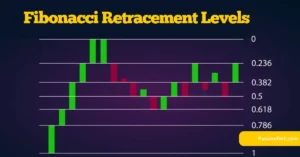
Recommended: What Are Fibonacci Retracement Levels? Their Importance For Crypto Trading
Transaction Costs (Fees, Commissions, Slippage):
The world of trading isn’t frictionless. Transaction costs, including commissions, spreads, and slippage, eat into your profits. Failing to factor these costs into your backtesting can lead to an overestimation of your strategy’s profitability. Here’s why you need to account for them:
Remember, the goal is to create a realistic simulation. Use realistic transaction costs based on your chosen brokerage or trading platform to get a more accurate picture of your strategy’s potential profitability.
Developing a robust trading strategy is crucial for successful backtesting. This section explores two key concepts and introduces a technique to help you refine your strategy before putting it to the test.
Paper Trading vs. Backtesting:
Both paper trading and backtesting involve simulating trades, but they serve different purposes.
While paper trading offers valuable experience, backtesting allows for a more controlled environment where you can compare different strategies and assess their statistical performance.
Combining Indicators and Strategies:
Many traders don’t rely on a single indicator to make trading decisions. They often combine multiple technical indicators or even combine different trading strategies altogether. This can potentially lead to better results than relying on a single approach.
Here are some ways to combine strategies:
However, be cautious! Adding more indicators or strategies doesn’t necessarily guarantee success. Overfitting your strategy to historical data can lead to misleading results (we’ll discuss this in a later section).
Walk-Forward Optimization:
One of the biggest challenges in backtesting is preventing “look-ahead bias.” This occurs when you unknowingly use information from the future (data points not available at the time the trade would have been executed) to optimize your strategy.
Walk-forward optimization is a technique that helps mitigate this bias. Here’s how it works:
By simulating real-world conditions where you wouldn’t have access to future data, walk-forward optimization helps ensure your strategy is robust across different market environments.
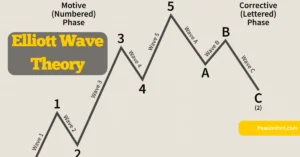
Recommended: Elliott Wave Theory for Crypto Trading | A Comprehensive Guide
Backtesting isn’t just about running a simulation; it’s about interpreting the results and gaining valuable insights into your strategy’s performance. This section dives into key performance metrics and highlights the importance of considering statistical significance to avoid misleading conclusions.
Performance Metrics (Sharpe Ratio, Drawdown):
Backtesting generates a wealth of data, but focusing on the right metrics helps you understand your strategy’s profitability and risk profile. Here are two commonly used metrics:
There are “acceptable” ranges for these metrics depending on your trading style and risk tolerance. Analyzing them in conjunction helps you understand your strategy’s potential for generating profits while managing risk.
Statistical Significance of Results:
Just because a strategy performs well in backtesting doesn’t guarantee future success. It’s crucial to consider the statistical significance of your results. Here’s why:
By understanding the statistical significance of your backtesting results, you can avoid making decisions based on misleading data.
Overfitting and Look-Ahead Bias:
Earlier, we mentioned “look-ahead bias” as a potential pitfall in backtesting. Here, we explore this concept along with its close cousin, “overfitting.”
Techniques like walk-forward optimization and out-of-sample testing help mitigate these biases by ensuring your strategy is evaluated on data it wouldn’t have had access to in a real-world scenario.
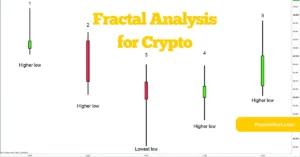
Recommended: Understanding Fractal Analysis for Cryptocurrency Market Trading
Backtesting isn’t limited to basic historical analysis. The world of quantitative trading offers advanced techniques that can take your strategy development to the next level. Here’s a glimpse into two powerful approaches.
Machine Learning in Backtesting:
Machine learning algorithms are revolutionizing many fields, and backtesting is no exception. These algorithms can analyze vast amounts of historical data to identify patterns and relationships that might be difficult for humans to detect. This allows for:
While machine learning offers exciting possibilities, it’s important to understand its limitations. These algorithms are complex and require expertise to implement effectively.
Algorithmic Backtesting Platforms:
Gone are the days of hand-coding backtesting scripts. Many software platforms now offer automated backtesting capabilities with a variety of features, including:
Utilizing algorithmic backtesting platforms can streamline your workflow and unlock advanced capabilities, but remember, the quality of your results still hinges on the underlying strategy and the data you use.
Recommended: What is Algorithmic Crypto Trading? A Comprehensive Guide
Now that you’ve explored the key elements of backtesting trading strategies, let’s recap the process:
Backtesting is a valuable tool for developing and evaluating trading strategies, but remember, it’s not a crystal ball.
Backtesting provides a powerful tool for analyzing and refining trading strategies. Remember, it’s a process, not a one-time event. Combine backtesting with other research, risk management practices, and a healthy dose of caution before deploying strategies with real capital.