Business Address
Office 5737 58 Peregrine Road Hainault Ilford Essex IG63SZ UK

Business Address
Office 5737 58 Peregrine Road Hainault Ilford Essex IG63SZ UK

Contents
Cryptocurrency traders often rely on technical analysis to make informed trading decisions, and one of the key tools in their arsenal is Fibonacci retracement levels. These levels, derived from the Fibonacci sequence, hold significance in predicting potential support and resistance areas on price charts. In the volatile world of cryptocurrencies, understanding Fibonacci retracements can provide traders with valuable insights into market trends and potential reversal points.
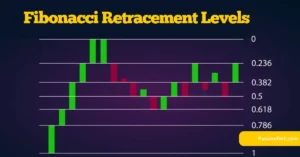
In the realm of cryptocurrency trading, Fibonacci retracement levels are utilized to identify key price levels where the market is likely to experience a pullback or bounce. These levels, including 23.6%, 38.2%, 50%, 61.8%, and 78.6%, are derived from the Fibonacci sequence and are believed to represent significant areas of support or resistance. For instance, if a cryptocurrency’s price is in an uptrend and experiences a pullback, traders may look to Fibonacci retracement levels to identify potential entry points where the price could bounce back up.
Traders calculate Fibonacci retracement levels by identifying a significant high and low on the price chart and applying the Fibonacci ratios to determine potential retracement levels. These levels are then plotted on the chart, providing traders with clear visual cues of where price reversals may occur. In the fast-paced world of cryptocurrency trading, having a good grasp of Fibonacci retracement levels can help traders anticipate market movements and make more informed trading decisions.
Recommended: What Is Onchain Analysis, And Why Is It Useful For Crypto Traders?
In the fast-paced world of crypto trading, timing entry and exit points can be tricky. Fibonacci retracements come into play by providing potential areas where price reversals might occur after a strong upward move in a cryptocurrency’s price.
Here’s how it works:
Remember: These retracement levels are not guaranteed reversal points, but rather areas where price action might pause or stall during a pullback.
As mentioned earlier, the most commonly used Fibonacci retracement levels are:
It’s important to remember that these levels act as guidelines, and the actual price action in a cryptocurrency might not adhere strictly to them. Market conditions, news events, and overall sentiment can all influence how price reacts at these retracement zones.
Recommended: What is a Crypto Order Book? Ultimate Guide for Beginners
Technical analysis is a cornerstone for many cryptocurrency traders, aiming to predict future price movements based on historical data and identified patterns. Fibonacci retracements seamlessly integrate into this approach. By utilizing ratios derived from the Fibonacci sequence, traders can strategically place support and resistance zones on a cryptocurrency’s price chart. These zones highlight areas where the price might encounter buying or selling pressure, potentially leading to reversals or continuations of the current trend. While not a crystal ball, incorporating Fibonacci retracements alongside other technical indicators like moving averages or RSI can provide valuable insights for making informed trading decisions in the dynamic world of cryptocurrency.
So, how can you leverage Fibonacci retracements in your cryptocurrency trading strategies? Here are some ways:
Remember: While Fibonacci retracements offer valuable insights, they should not be used in isolation. Always combine them with other technical indicators and consider fundamental factors that might influence the cryptocurrency’s price.
Recommended: Sentiment Analysis in Crypto Trading: A Comprehensive Guide for Beginners
While Fibonacci retracements help predict support zones during pullbacks, Fibonacci extensions can be used to estimate potential price targets after a breakout from a trend in a cryptocurrency. These extensions are derived from the same Fibonacci ratios (applied in percentages above the swing high) and can indicate areas where the price might encounter resistance on its upward move.
For instance, common Fibonacci extension levels include 161.8%, 261.8%, and 423.6%. Keep in mind that extensions are not exact targets, but rather potential zones where the uptrend might stall or reverse in the chosen cryptocurrency.
The world of technical analysis goes beyond basic indicators like Fibonacci retracements. For advanced cryptocurrency traders, Fibonacci ratios can also be used to identify harmonic chart patterns. These complex patterns involve specific price relationships and retracements that align with Fibonacci ratios. While these techniques can be powerful, they require a deeper understanding of technical analysis and are best suited for experienced traders who have honed their skills in recognizing these patterns.
Recommended: What is Crypto Volatility? A comprehensive Guide for Beginners
Let’s look at a practical example using Bitcoin (BTC) on a daily chart. Imagine a scenario where BTC experiences a strong price surge from $30,000 to $50,000. We can then utilize Fibonacci retracement levels to identify potential support zones during a retracement:
If, after reaching $50,000, the price of BTC starts to pull back, these Fibonacci retracement levels ($38,500 and $31,500) could indicate areas where the price might find support and potentially reverse, continuing the uptrend. However, this is just an example, and real-world price action may not strictly adhere to these levels.
The allure of Fibonacci retracements can be strong, but it’s crucial to remember they are not a fail-proof prediction tool for cryptocurrency markets. Here are some limitations to consider:
Fibonacci retracements offer a valuable tool for cryptocurrency traders to identify potential support and resistance zones during price corrections. However, remember to use them in conjunction with other technical indicators and fundamental analysis for well-rounded trading decisions. By understanding their limitations and combining them with other strategies, you can leverage Fibonacci retracements to enhance your cryptocurrency trading experience.