Business Address
Office 5737 58 Peregrine Road Hainault Ilford Essex IG63SZ UK

Business Address
Office 5737 58 Peregrine Road Hainault Ilford Essex IG63SZ UK

Contents
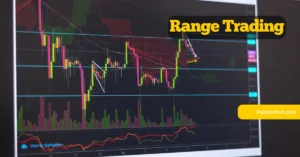
Range trading is a popular trading strategy utilized by both novice and experienced traders in various financial markets, including stocks, forex, and cryptocurrencies. At its core, range trading involves identifying and capitalizing on price movements within a defined range or channel. Unlike trend-following strategies that aim to profit from directional price movements, range trading seeks to exploit price oscillations between established support and resistance levels.
Range trading focuses on capitalizing on price movements within a defined range. Imagine a price chart where the price seems to be stuck between two specific points, bouncing back and forth within a predictable zone. This is the ideal scenario for a range trader. By identifying these ranges and implementing strategic entry and exit points, range trading offers the potential for consistent profits, especially for beginners. This comprehensive guide will equip you with the knowledge and tools to navigate the world of range trading, covering everything from identifying suitable markets to implementing effective trading strategies.
Not all markets exhibit the wild price swings often portrayed in movies. Sometimes, prices enter a period of range-bound trading, characterized by consolidation and limited directional movement. This lack of a clear uptrend or downtrend creates the perfect environment for range trading strategies to shine.
Identifying these range-bound markets is crucial for successful range trading. Here are some key tools you can utilize:
In addition to these, other helpful tools include Bollinger Bands, which create a channel around the price based on volatility, and Channel Lines, which are trendlines drawn along price highs and lows to visualize the range. By incorporating these tools and analyzing historical price movements, you can effectively identify suitable range-bound markets for your range trading endeavors.
Recommended: What are Support and Resistance in Crypto Trading? A Comprehensive Guide
The core principle behind range trading is deceptively simple: capitalize on the tendency of prices to bounce between established support and resistance levels. Imagine a tennis ball bouncing off the court – that’s the essence of range trading. We wait for the price to reach support, anticipating a reversal upwards, and vice versa at resistance.
To successfully navigate these ranges, we need well-defined entry and exit strategies. Here are a couple of popular approaches:
By understanding these core principles and employing effective entry and exit strategies, you can start formulating your own range trading approach.
Now that you grasp the fundamental concepts of range trading, let’s explore some practical strategies you can incorporate into your trading toolbox.
1. Support and Resistance Levels:
This is a cornerstone strategy in range trading. Once you’ve identified support and resistance zones, you can place buy orders slightly above support (e.g., $10.05 for a support level at $10) and sell orders slightly below resistance (e.g., $11.95 for a resistance level at $12). This approach leverages the expectation that the price will bounce off these levels, allowing you to capture profits from the price reversal.
2. Stochastic Oscillator:
This technical indicator measures price momentum by comparing the closing price of a security to its price range over a specific period. It generates overbought and oversold zones, which can be valuable for range trading. When the Stochastic Oscillator enters the overbought zone near resistance, it might signal a potential price reversal downwards. Conversely, readings in the oversold zone near support could suggest an impending upward move. By strategically entering long positions near the oversold zone and short positions near the overbought zone, you can potentially capitalize on these price swings within the range.
3. Relative Strength Index (RSI):
Similar to the Stochastic Oscillator, the RSI is another momentum indicator that measures the magnitude of recent price changes. The RSI oscillates between 0 and 100, with readings above 70 generally considered overbought and readings below 30 considered oversold. In range trading, these zones can provide entry signals. Entering a long position when the RSI dips below 30 near support and entering a short position when the RSI climbs above 70 near resistance might offer opportunities to profit from price reversals within the defined range.
Remember: Stop-loss orders are crucial for managing risk in any trading strategy, and range trading is no exception. Placing stop-loss orders above resistance for long positions and below support for short positions helps limit potential losses if the price breaks out of the expected range.
Recommended: Relative Strength Index (RSI) Indicator for Crypto Trading | A Comprehensive Guide
While range trading offers the potential for consistent profits, it’s vital to remember that all trading carries inherent risks. Effective risk management is paramount to navigate the financial markets successfully. Here are some key concepts to consider:
By implementing these risk management practices, you can become a more disciplined and responsible trader, making informed decisions and protecting your capital in the dynamic world of range trading.
Recommended: The Ultimate Guide to Crypto Trading Psychology: Make Smarter Decisions, Maximize Profits
While the core strategies covered so far provide a solid foundation for range tr ading, experienced traders often utilize more advanced techniques to potentially enhance their returns. Here’s a glimpse into two such methods:
These are just a couple of examples, and exploring these advanced techniques can further refine your range trading skills as you gain experience.
The ever-evolving world of cryptocurrency has seen a surge in the popularity of range trading. The inherent volatility of cryptocurrencies can create well-defined ranges, making them suitable for range trading strategies. However, there are some unique considerations to keep in mind when applying range trading to the crypto market:
By factoring in these cryptocurrency-specific considerations, you can adapt your range trading approach to navigate the dynamic world of cryptocurrencies.
This comprehensive guide has equipped you with the fundamental knowledge and tools to embark on your range trading journey. We’ve explored the core principles, effective entry and exit strategies, and crucial risk management practices. Remember, range trading offers the potential for consistent profits, especially for beginners, due to its focus on defined ranges and strategic entry/exit points.
However, success in any trading strategy requires dedication, continuous learning, and practice. Utilize demo accounts to test your skills and refine your approach before venturing into live trading. There’s a wealth of information available online and through educational resources – keep exploring and developing your range trading expertise. With discipline, sound risk management, and a growing knowledge base, you can navigate the world of range trading with confidence.